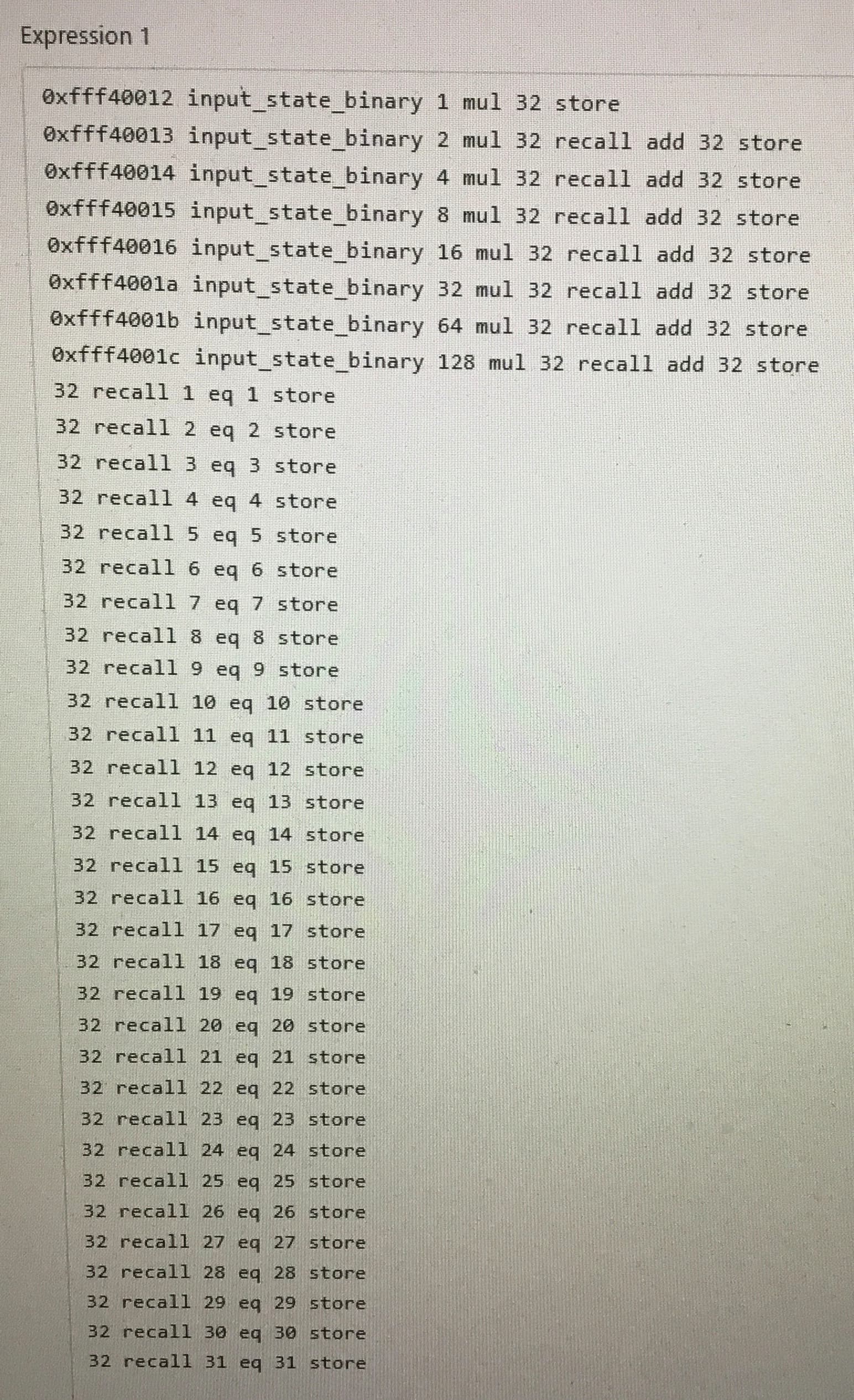
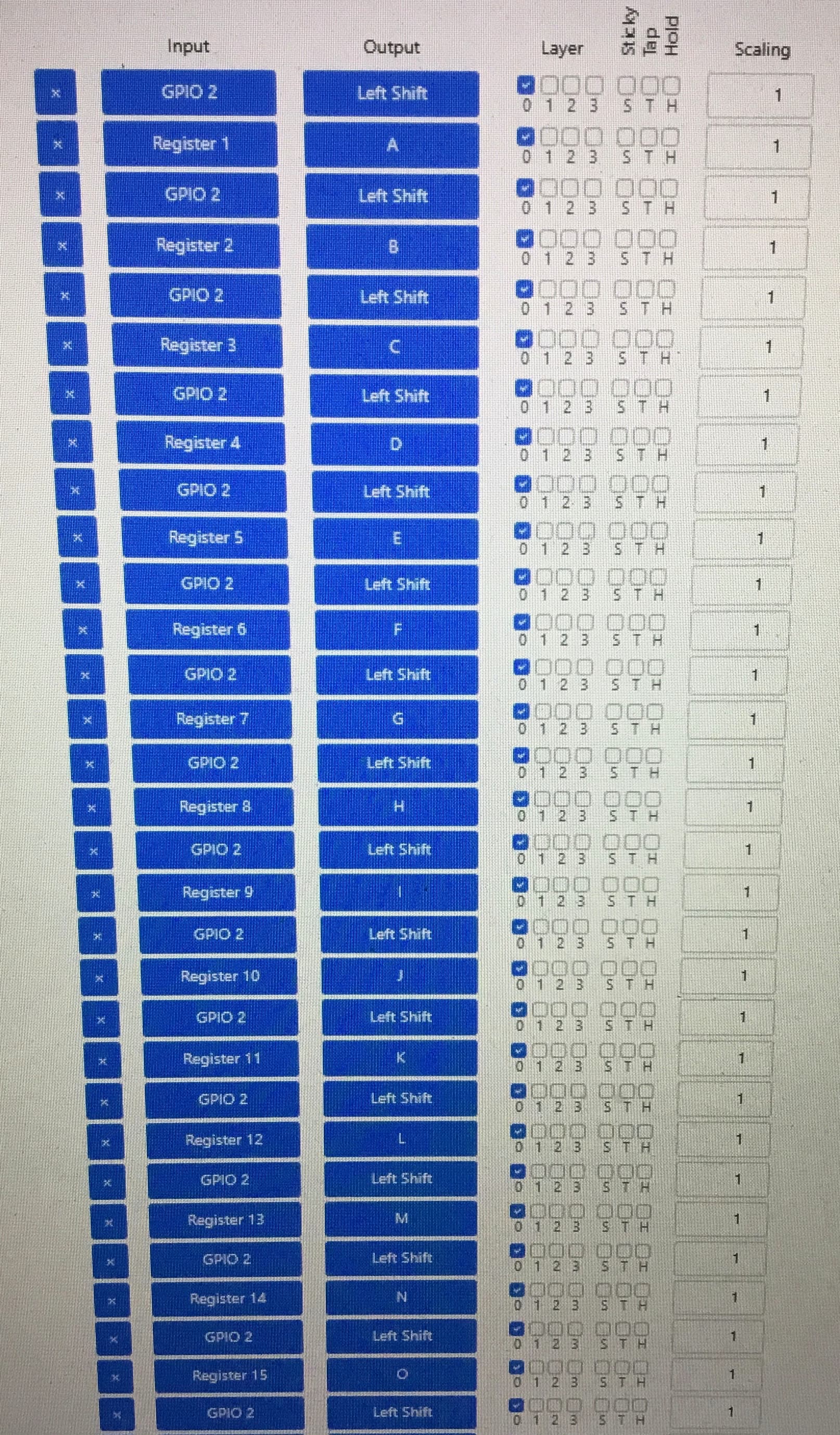
With the actual HID-Remapper the transfer of 31 different characters can easily be done. With the trick to use the shift key and an extra GPIO the amount could be doubled, means also capital letters could be sent. But numbers special signs and control signs are still missing. I tried to fix this problem by selecting different layers, without having any success ( maybe because evaluation is done direct every cycle).
At the moment I see the only way to realize my idea is to extend the amount of stores e.g. to 256, then every code can separately be specified in the map.
An other way could be to send the received byte directly to the USB - Interface.
The parallel interface is realized via GPIO 18,19,20,21,22,26,27,28.To send the data a second raspberry pi pico is direct connected to the GPIOs 18,19,20,21,22,26,27,28.
The parallel data is sent for 1 ms for every sign. In my new version I send 7 bit data (planned ASCII) and one bit (GPIO 18) for the shift command, but this has the disadvantage, that shift together with the 7 bit send produces more then one sign ? Actual I have no idea why this happens (maybe because the evaluation of shift and sign is not in the same 1 ms loop) ? The best solution for me would be if data could be sent (injected) serial with a fixed baud rate (e.g. 9600 baud) than only one GPIO would be needed and the other GPIOs could be used for other purposes. I first planned to send IR-data, but then also other functions as e.g. voice control, automatic 3d scanner platform etc. could be realized because all these extra functions can run on the second pico.
By the way: Is it possible to input analog data from the GPIOs 26,27,28 and output to USB ? For this I did not find a possibility.